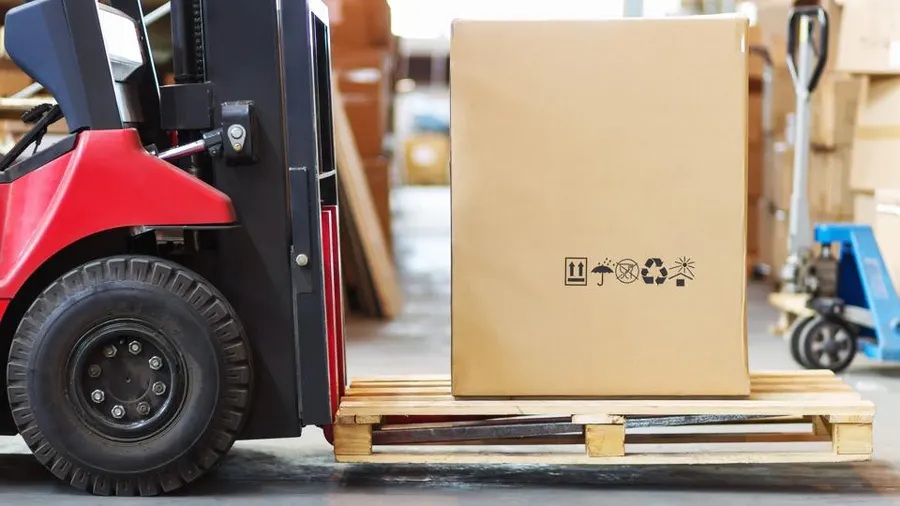
A wooden crate is the safest way to ship something fragile, heavy or valuable over a long distance. But a crate only protects what is inside it if it is the right type, built to the right size, packed so nothing can shift, and handed to a carrier that knows how to move crated freight. These tips cover what to get right before, during and after you ship a crate, whether you build it yourself or let a professional crating team handle it.
Quick Answer: What Matters Most When Shipping a Crate
- Match the crate to the item. Glass, stone, artwork and antiques need a fully enclosed crate. Sturdy machinery and furniture can often travel in an open slatted crate.
- Build it with a skid base so it can be lifted with a forklift or pallet jack and never has to be tipped or dragged.
- Stop all movement inside. Cushion every side, then block and brace the item so it cannot shift, even if the crate is jolted.
- Measure and weigh the finished crate. The outside dimensions and total weight are what the carrier prices and plans around.
- Label it clearly with orientation arrows, fragile markings and the full delivery address on at least two sides.
- Ship it as freight with a mover that handles crates, declare its value, and inspect it at delivery before you sign.
When Does an Item Need a Crate?
Most furniture and household goods ship safely with blanket wrapping, padding and careful loading. A crate becomes the better choice when an item is:
- Fragile and hard to replace, such as framed art, mirrors, glass-front cabinets, marble or stone tops, sculptures and statues.
- High in value, including antiques, collectibles, musical instruments and electronics, where the cost of a crate is small next to the cost of damage.
- Heavy or oddly shaped, where a solid base and lifting points make handling safer for both the item and the crew.
- Travelling a long distance or overseas, where it will be loaded, unloaded and moved through more than one facility.
If you are unsure, ask the shipper before you build anything. At Ship Smart, our team can tell you whether an item really needs a crate or will travel safely with padding, so you do not pay for protection you do not need. Our post on why to use a crating company explains when professional crating pays for itself.
Choose the Right Type of Crate
Closed crates
A closed crate has solid walls and a solid lid on every side. It protects against impact, dust and moisture, and it is the standard choice for artwork, glass, stone and antiques. For anything delicate, add a foam or padded lining.
Open (slatted) crates
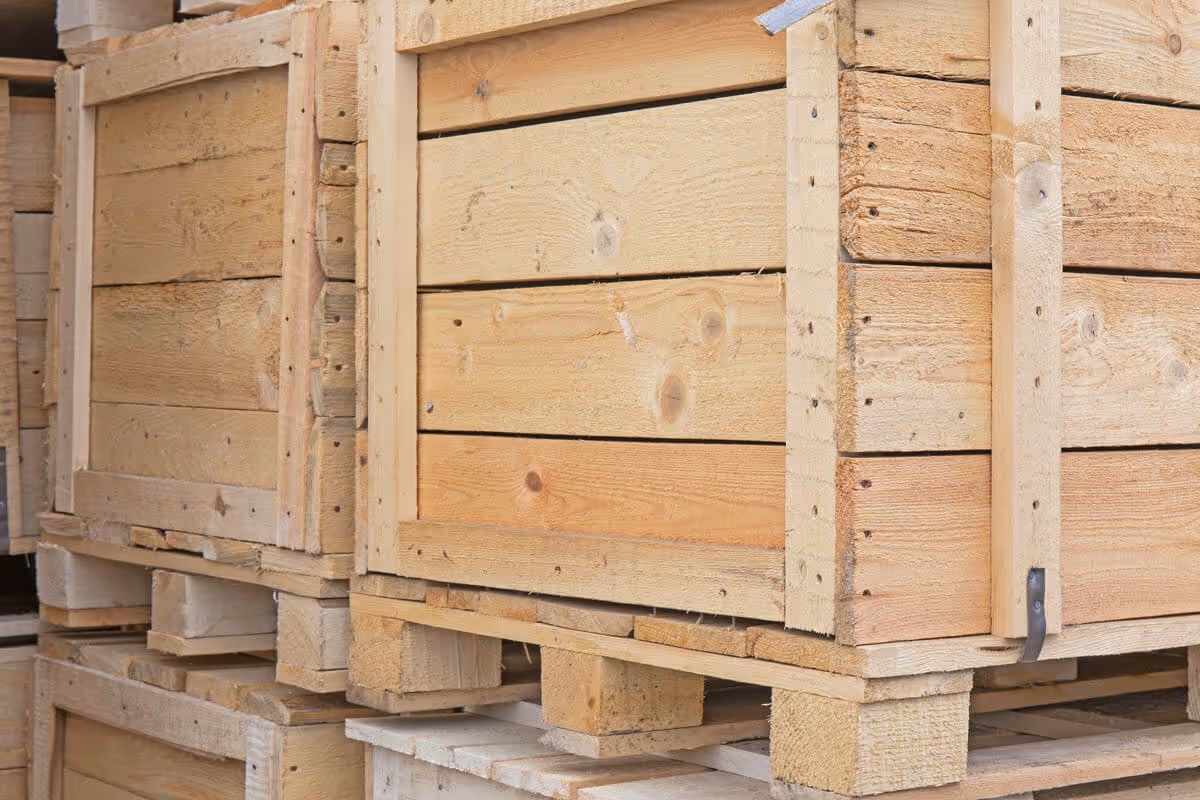
An open crate is a frame of boards with gaps between them. It is lighter and cheaper to build, and it works for sturdy items that mainly need a rigid frame and a base, such as machinery, equipment or solid wood furniture. It does not protect against punctures or moisture, so it is the wrong choice for anything with glass or a finished surface that could be scratched.
Crates for international shipments
If the crate is leaving the country, the wood matters. Most countries follow the ISPM 15 standard, which requires solid wood packaging to be heat-treated or fumigated and stamped with the official mark. Plywood and other engineered wood are generally exempt. A crate built from untreated lumber can be held, treated or refused at the border, so check the rules for the destination country before you build. Ship Smart uses customs-approved materials so crated shipments move through customs without delays.
Build It to the Right Size and Strength
The step-by-step build is covered in our guide to the art of crating and shipping. A few sizing and strength tips make the biggest difference:
- Measure the item at its widest points, including handles, legs and trim, then add room for cushioning on every side. A crate that is too tight transfers every bump straight to the item. A crate that is too loose lets it shift.
- Use a skid base. Runners under the crate leave space for forklift tines or a pallet jack, so the crate is lifted rather than slid or tipped.
- Size the lumber to the weight. Heavier items need thicker framing and a stronger base. If the crate flexes when you lift one corner, it is not strong enough.
- Use screws, not nails, for the lid. Screws hold better under vibration and let the crate be opened for inspection and closed again without damage.
- Keep it as compact as is safe. Freight is priced on weight, dimensions and density, so every extra inch of crate adds cost.
Secure the Item So Nothing Moves
Most damage inside a crate comes from the item moving, not from the crate being hit. Before closing the lid:
- Wrap the item first. Use soft, acid-free paper or a clean wrap on finished surfaces, then a layer of foam or bubble wrap. Do not let plastic sit directly on oil paintings or fresh finishes.
- Protect corners and edges with corner guards, the points most likely to take an impact.
- Block and brace. Fit foam blocks or padded wood cleats against the item so it is held in place on all sides, top included.
- Remove or secure loose parts. Take off glass shelves, knobs, legs and anything that can swing or detach. Pack them separately inside the crate and label them.
- Do the shake test. With the lid on, rock the crate gently. If you hear or feel movement inside, add more blocking before it ships.
Label and Document the Crate
Clear labels tell every handler how to treat the crate, and good records protect you if something goes wrong.
- Mark “This Side Up” arrows on all four sides and “Fragile” where it applies.
- Put the full delivery address, contact name and phone number on at least two sides, plus your own details as the shipper.
- Add any handling notes, such as “Do not stack” or “Lift from base only”.
- Photograph the item before crating and the crate once it is closed, and keep a written inventory of everything inside, including any parts packed separately.
- For high-value pieces, keep a recent appraisal or receipt with your shipping records.
Choose the Right Way to Ship It
A finished crate is usually too large and heavy for parcel carriers, so it ships as freight. When you compare options, ask:
- Do they handle crated items regularly? Experience matters more than price when the item is valuable.
- How many times will the crate be handled? Fewer transfers between trucks and terminals mean fewer chances for damage.
- Can they pick up and deliver to a home? Many freight carriers serve only commercial docks. A residential address may need a liftgate truck and a crew.
- Can they crate it for you? If you would rather not build the crate, a mover that crates in-house removes the guesswork.
Ship Smart specializes in small long-distance moves and shipments. We can pick up an item at your home, take it to our warehouse where our crating professionals build and pack the crate, and ship it to its destination. If you would rather see the work done in front of you, we also offer onsite crating, where our team brings the materials to your location. Onsite crating is an additional hourly charge and depends on availability. Learn more about our crating services.
Protect the Value of What You Ship
A well-built crate reduces the risk of damage, but it does not remove it. For anything valuable, make sure the shipment is covered for what it is actually worth. With Ship Smart, you declare the value of your items on the Declaration of Values page of your e-contract and choose your deductible. Coverage is priced per $1,000 of declared value, so you only pay to protect what matters to you. See how it works on our moving insurance page.
Prepare for Pickup and Delivery
- Check the access. Measure doorways, hallways, stairs and elevators on both ends so the crate, or the item before it is crated, can get in and out.
- Tell the shipper about tight spots, such as stairs, narrow driveways or buildings without a loading dock, so they send the right truck and crew.
- Be there, or have someone there, at both pickup and delivery.
- Inspect the crate before you sign. If you see damage to the outside, write it on the delivery receipt and take photos before the driver leaves. Open the crate as soon as you can and report any damage to the item right away.
- Keep the crate until you have checked the item. You may need it for a claim, or to ship the piece again.
Trust Your Most Valuable Items to Experienced Crating Professionals
Ship Smart has spent more than two decades crating and shipping items that cannot be replaced. Our team moved Les Paul’s first state-of-the-art electric guitars to the House of Sound at the Discovery World Museum in Wisconsin, each valued at over a million dollars, and has since crated electronics for Stanford and NASA and art for private and museum collections. Whether you are shipping fine art, antiques or other high-value items, we build the crate around the item and ship it with the same care. If you are budgeting for a valuable piece, our guide to the cost of shipping antiques, crating and insurance breaks down what you can expect to pay.
Get a free estimate or call us at (866) 333-8018 to talk through your shipment.
Frequently Asked Questions
How much bigger than the item should a crate be?
Leave enough room to cushion the item on every side, plus space for blocking and bracing. The right amount depends on how fragile the item is, so ask your shipper for guidance before building. A crate that is too tight or too loose will both put the item at risk.
Can I ship a crate with a parcel carrier?
Usually not. Most finished crates exceed parcel size and weight limits and ship as freight instead. A shipper that handles crated freight can pick it up, move it and deliver it with the right equipment.
Do I need a crate to ship furniture?
Not always. Most furniture ships safely with blanket wrapping and padding. Crating is worth it for pieces with glass, marble or stone, delicate carving, or high value.
Can someone crate the item for me?
Yes. Ship Smart can pick up your item and crate it at our warehouse, or send a team to crate it at your location for an additional hourly charge, depending on availability.
What wood should I use for an international crate?
Use plywood or solid wood that has been heat-treated or fumigated and stamped to the ISPM 15 standard. Untreated solid wood can be stopped at customs in most countries.





 28 OCTOBER 2026