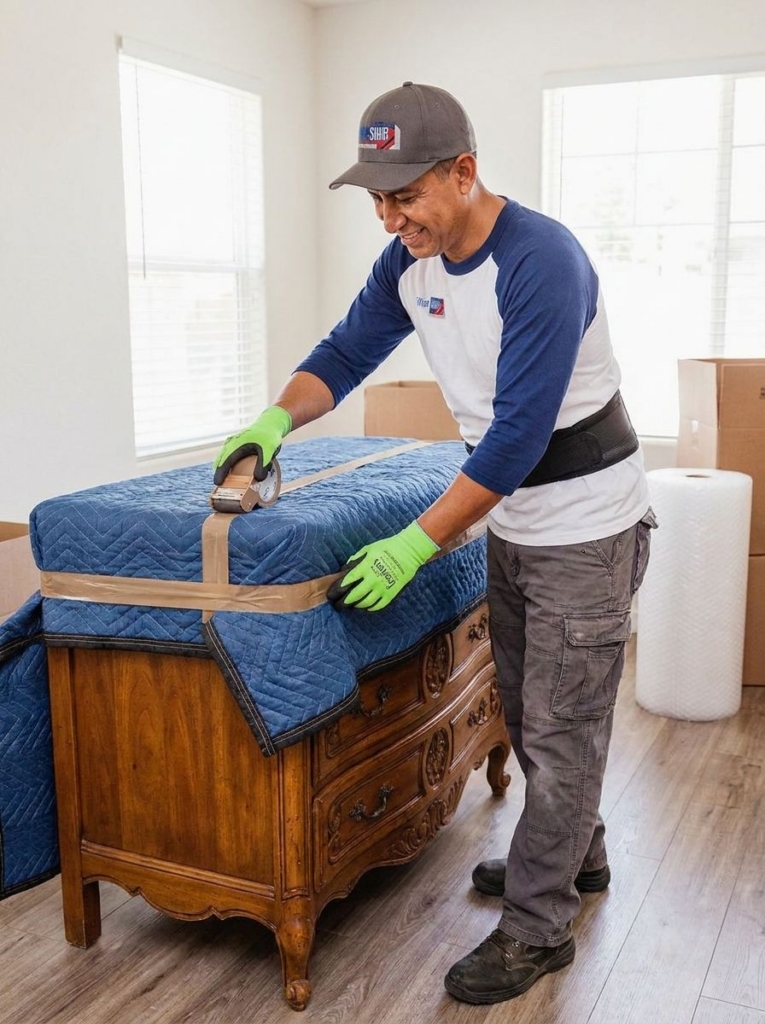
The cost to ship antiques or valuable furniture depends on more than mileage. Size matters, but so do fragility, value, condition, access, packing, and the number of hands that touch the piece. A simple antique chair can be moved safely with careful blanket wrapping. A curved-glass cabinet or marble-top table may require custom crating, declared-value coverage, and specialty handling from pickup to delivery.
Use the ranges below as planning numbers, not fixed prices. Antique furniture shipping costs are usually quoted because two pieces with similar dimensions can carry very different risks.
Quick Answer: Antique and Valuable Furniture Shipping Cost Ranges
For many small-load or specialty furniture shipments, broad pricing often falls into these ranges:
- Blanket-wrap or small-load furniture shipping: about $300 to $1,000+ for lower-risk pieces, depending on distance, size, and service area.
- White-glove antique furniture shipping: often $600 to $2,500+, especially when in-home pickup, careful handling, appointment delivery, or room-of-choice placement is included.
- Freight with professional packing or pallet preparation: commonly $500 to $2,000+, though terminal handling, liftgate service, and packing can add to the total.
- Custom-crated shipments: often $1,000 to $4,000+ for valuable, oversized, fragile, or long-distance pieces. Very large or museum-quality items can cost more.
These are only ballparks. A sturdy antique chair moving regionally may be on the low end. A fragile glass-front cabinet moving cross-country with a full crate, inside pickup, inside delivery, and declared value coverage may cost several thousand dollars.
The lowest quote is not always the best value. Saving a few hundred dollars on transport can be a poor trade if the carrier uses the wrong packing method or transfers the item through too many facilities. With antiques, avoidable damage can easily exceed the transportation savings.
What Makes Antique Furniture More Expensive to Ship Than Standard Furniture?
Antiques often cost more to ship because they are harder to protect. Many are heavy but delicate. Others are irregularly shaped, hand-carved, or built with materials that do not tolerate vibration, stacking, moisture, or rough handling.
A modern dresser can often be padded, strapped, and moved like other household goods. An antique dresser may have brittle veneer, loose joints, fragile pulls, an original finish, or a marble insert that must be removed and packed separately. Those details change the labor, materials, and liability involved.
Replacement value is also harder to calculate. An antique may be one-of-a-kind, inherited, discontinued, part of a matching set, or tied to a specific family story. For heirlooms, provenance and emotional value may matter as much as market value. That is why people who are shipping sentimental valuables often need more than basic transportation.
Higher-risk features that can increase the cost of shipping valuable furniture include loose veneer, curved glass, mirrors, marble tops, carved legs, inlays, old glue joints, original finishes, fragile hardware, and unstable repairs. Some carriers may require extra labor, professional packing, custom crates, or value documentation before accepting the shipment.
Antique Furniture Shipping Cost by Item Type and Risk Level
It is tempting to estimate shipping by weight and mileage alone. With antiques, handling risk can matter just as much. A light, fragile item may need more protection than a heavier, sturdier one.
Lower-risk pieces — sturdy chairs, small tables, benches, trunks, and nightstands
Lower-risk antiques are usually compact, stable, and free of loose parts or fragile surfaces. Examples include sturdy wooden chairs, small side tables, benches, trunks, and nightstands in sound condition.
These pieces may be good candidates for blanket wrap or professional padding when they do not have brittle veneer, weak legs, glass, stone, or delicate ornamentation. Costs are usually lower because fewer people can handle the item and may not need a crate. Still, the finish should be protected from rub marks, straps, and moisture.
Moderate-risk pieces — dressers, desks, armoires, china cabinets, and dining pieces
Moderate-risk pieces are larger, heavier, or more complex. Dressers, desks, armoires, china cabinets, dining tables, and sideboards may require disassembly, drawer securing, corner protection, packing of removable hardware, and two-person handling.
A dining table with removable legs may be easier to move than one with a fixed pedestal. A dresser with stable drawers is simpler than one with loose pulls and veneer lifting at the edges. The shipping cost for antique furniture rises when the shipper must spend more time preparing the piece before it ever leaves the home.
High-risk pieces — glass-front cabinets, mirrors, marble-top tables, grandfather clocks, carved antiques, and museum-quality pieces
High-risk antiques often need specialty handling or custom crating. This group includes glass-front cabinets, antique mirrors, marble-top tables, grandfather clocks, heavily carved furniture, gilded pieces, and museum-quality items.
Glass, stone, and old joinery are especially vulnerable to vibration and twisting. Grandfather clocks may require pendulums, weights, glass panels, and internal mechanisms to be secured separately. A fragile $8,000 cabinet shipped 300 miles can cost more than a sturdy dresser shipped much farther because the cabinet needs more planning, labor, and protection.
Crating, Packing, and Protection Costs: What You’re Really Paying For
Custom crating is one of the biggest cost drivers for antiques. It is often necessary for fragile, high-value, oversized, or unusually shaped pieces, but it is not just a wooden box.
The cost to crate antique furniture may include on-site or warehouse measurements, crate design, wood crate construction, foam blocking, internal bracing, corner protection, glass masking, moisture barriers, pallet bases, and skilled labor. For delicate pieces, the crate must restrict movement without putting pressure on weak areas.
Common protection levels include:
- Blanket wrap: professional moving pads and careful loading for stable pieces.
- Padded wrap: heavier padding, stretch wrap, corner guards, and surface protection.
- Partial crate: added protection for vulnerable areas such as glass, stone, or carved sections.
- Full custom crate: a built-to-size crate with blocking and bracing for high-risk items.
- Palletized freight preparation: packing and securing the item to a pallet for freight movement.
Packing and crating costs for furniture are usually separate from base transportation. They vary by item size, material, fragility, pickup location, and whether the work must be done inside the home or at a packing facility.
Crating is not always necessary. A sturdy, lower-value chair may be safer and more economical when paired with a professional blanket wrap and controlled handling. The goal is not to buy the most expensive protection. It is to match the protection to the risk.
White-Glove Shipping vs. Freight vs. DIY: Cost and Risk Tradeoffs
The cheapest method on paper is not always the least expensive once damage risk, labor, and time are factored in. For antiques, compare the total value of the service, not just the sticker price.
White-glove or specialty furniture shipping
White-glove or specialty furniture shipping usually costs more than basic freight. Still, it can include in-home pickup, careful loading, blanket wrapping, fewer touchpoints, appointment delivery, and room-of-choice placement. For valuable furniture, fewer transfers can matter more than better packing.
This option often makes sense when the item is going from one residence to another, when stairs or elevators are involved, or when the owner cannot safely pack and load the piece. It is also a better fit for partial moves, in whichonlyy a few important pieces need to travel along distances
Freight shipping
Freight can be economical for some crated pieces, especially when the item is already packed and palletized and can tolerate terminal movement. It is less ideal for uncrated furniture that cannot be stacked, tilted, or moved by forklift.
Freight networks often involve terminals, pallets, liftgates, forklifts, transfers, and multiple handlers. That does not mean freight is always wrong. It means the packing must be strong enough for the environment. A freight-only quote and a white-glove crated quote are not equivalent.
DIY rental truck or self-packing
DIY may look cheaper because the truck rental is visible and the risk is not. Add packing materials, moving blankets, straps, dollies, fuel, hotels, time off work, helpers, and the possibility of injury or damage.
DIY or standard freight becomes too risky when the item is an irreplaceable heirloom, is in unstable antique condition, includes fragile glass or stone, has a high appraised value, is being moved over a long distance, or cannot be packed and loaded correctly. In those cases, working with professional shippers can reduce the risk of a valuable piece being damaged by avoidable mistakes.
Insurance, Declared Value, Appraisals, and Documentation Costs
The shipping cost for antique furniture is not complete unless you consider protection against loss or damage. The more valuable or irreplaceable the piece, the more important it is to understand what is covered and what is not.
In plain terms, basic carrier liability is the minimum responsibility a carrier provides and may be limited. Declared value is the value you state for the shipment, which can affect the carrier’s liability and the price. Third-party insurance is separate coverage purchased through an insurer. Terms vary, so ask for written details before shipping. This is not legal advice; it is a reminder to read the coverage language carefully.
Declared value or insurance premiums can increase the quote, especially for expensive furniture, appraised antiques, or pieces that would be difficult to repair. Some carriers or insurers may also require professional packing or crating for coverage to apply.
Before shipment, gather documentation such as an appraisal, purchase receipt, provenance records, maker’s marks, serial numbers, restoration records, and clear photos. Documentation is especially important for irreplaceable pieces and adjacent high-value categories such as shipping rare art and sculpture, where condition and provenance can affect both value and claims.
Use this pre-shipment photo checklist:
- Front, back, left side, and right side
- Close-ups of scratches, chips, cracks, stains, or repairs
- Joints, legs, feet, corners, and carved details
- Glass, mirrors, marble, inlays, and hardware
- Drawer interiors and underside if accessible
- Maker’s marks, labels, signatures, or serial numbers
- Packed condition, if visible before pickup
Take photos in good light before packing begins. Keep copies of all paperwork and correspondence until the shipment is delivered and inspected.
How to Get a More Accurate Quote for Shipping Valuable Furniture
Because antique pricing depends on condition, value, access, and handling requirements, the most accurate estimates come from photos, dimensions, and service details. If you need a custom antique furniture shipping quote, be ready to share more than the pickup and delivery ZIP codes.
Collect this information before requesting prices:
- Item type, age, and general condition
- Dimensions: height, width, depth, and any removable parts
- Weight estimate, if known
- Pickup and delivery ZIP codes
- Residential or commercial locations
- Stairs, elevators, narrow halls, gates, or long carries
- Parking access for a truck
- Photos from multiple angles
- Estimated value or appraisal amount
- Fragility notes, including glass, marble, veneer, weak joints, or loose hardware
- Deadline flexibility and storage needs
Ask each provider what the quote includes. Does it cover packing, custom crating, inside pickup, inside delivery, room-of-choice placement, debris removal, declared value or insurance, and storage if needed? Are there extra charges for stairs, shuttle service, difficult access, or missed appointments?
Do not compare quotes unless the service levels match. A basic freight rate may exclude packing, crating, residential pickup, liftgate service, and inside delivery. A white-glove quote may include services that prevent damage and save labor on both ends.
For valuable antiques, ask the shipping provider to recommend the least risky service level, not simply the cheapest method. The right choice should protect the item, respect its value, and make the full cost clear before the piece leaves your home.