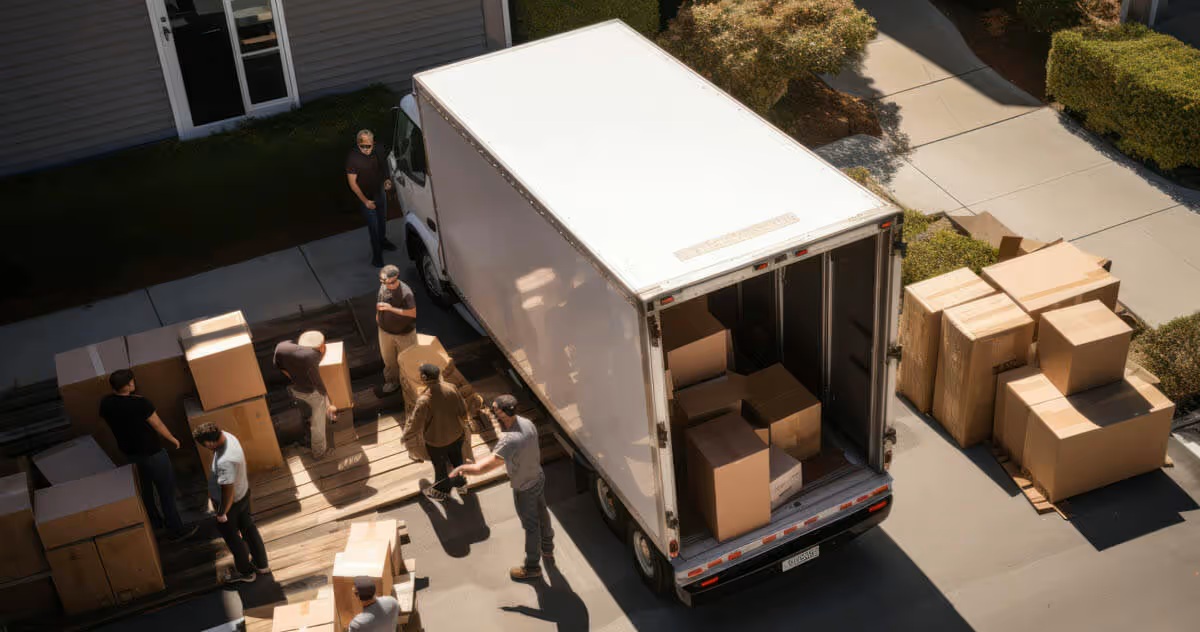
You don’t own a truck. You may not even own a car. And the idea of white-knuckling a 16-foot rental over the Rockies with everything you own rattling behind you sounds like a punishment, not a plan. Good news: shipping household goods across the country without ever touching a steering wheel is not only possible — for most people moving less than a full house, it’s cheaper than the DIY route once you add up fuel, insurance, hotels, and the days off work.
This guide is for the no-vehicle move: the Brooklyn renter, the transit-first Chicagoan, the person who plans to board a plane while their belongings travel separately. (If a car is part of your move, that’s a different playbook — see our guide to shipping a car and household items cross-country.) Below, we rank the four realistic ways to ship your things to another state, compare real-world costs, and walk through exactly how to prepare.
How Can I Move My Belongings to Another State? Your Four Real Options
Every no-truck move comes down to one of four methods. They scale by how much you’re moving — from a few boxes to a full one-bedroom.
1. Parcel carriers (UPS, FedEx, USPS)
Best for: a few boxes, nothing bulky.
If your entire shipment fits in cartons you can lift, parcel shipping is the simplest option. Print labels, schedule a pickup or drop boxes at a store, and track everything to the door.
The limits are hard ones, though. UPS caps standard packages at 150 pounds and 165 inches in combined length and girth, with a 108-inch maximum length — and oversized boxes trigger steep surcharges well before you hit those ceilings. A dresser, a sofa, or a mattress simply doesn’t ship via parcel without freight-style crating, which usually costs more than the furniture is worth. Expect to pay roughly $300–$800 to ship a stack of medium boxes coast to coast, more if you want speed.
The catch: no furniture, no padding help, and damage claims on self-packed boxes are notoriously hard to win.
2. Luggage and box shipping services
Best for: suitcases and boxes when you’re flying to your new state.
Luggage-forwarding services piggyback on the same parcel networks but bundle in door pickup, simpler pricing, and delivery timed to your arrival. For a student move or a “two suitcases and four boxes” relocation, they beat dragging bags through an airport and often undercut checked-baggage fees for a second or third bag.
Pricing is typically a flat rate per bag or box, tiered by weight and delivery speed, which makes budgeting easy — but that convenience is baked into the rate. For one or two suitcases on a standard-speed service, the math usually works in your favor. Start shipping five or six heavy boxes, or reach for the expedited tiers, and the per-piece premium stacks up until plain parcel shipping with labels you print yourself becomes the cheaper play. Run both quotes before you book; the break-even point arrives sooner than most people expect.
They inherit parcel shipping’s weight and size limits, so the same rule applies: the moment furniture enters the picture, this option exits it.
3. Freight shipping (LTL) you arrange yourself
Best for: confident DIYers with a palletizable load.
Less-than-truckload (LTL) freight is how businesses ship items too large for parcel shipping — your shipment shares trailer space with others, and you pay for the space and weight you use. Booked through a freight broker or marketplace, it can be genuinely cheap: sometimes a few hundred dollars for a small load between major cities.
The trade-off is that freight is built for shippers, not households. You’ll need to palletize and shrink-wrap your own goods, decode terms like “freight class” and “liftgate fee,” be present for dock-style pickup, and accept that carrier liability is pennies on the pound unless you buy extra coverage. Curbside means curbside — the driver is not carrying your dresser up three flights.
4. Small-load door-to-door movers
Best for: single items, partial loads, and studio-to-one-bedroom moves.
This is the category built for the gap between “a few boxes” and “a full moving van.” A small move service like Ship Smart handles collections of goods under 2,000 pounds — the range most full-service van lines won’t touch without charging you their minimum anyway. Crews pick up at your door, then professionally pack, custom-crate fragile pieces, and palletize everything at a local warehouse before it ships via consolidated freight. At the other end, you can choose curbside drop-off or full inside delivery.
Two things make this model work for car-free movers. First, pricing is based on your actual inventory, so you pay only for what you’re moving — not an empty half-truck. Second, someone else does all the lifting, driving, and freight paperwork. Ship Smart has specialized in exactly this kind of move for more than 25 years, delivers to any city or state in the US, and keeps its damage rate below 2%. If you’re weighing this route against a rental, our rundown of signs that you need a partial-load service rather than a full moving truck is a useful gut check.
What Does Shipping Household Goods Across the Country Actually Cost?
Typical market ranges for a cross-country move, by method:
Parcel Carriers: Best for shipping boxes only (under 150 lbs each), this method typically costs between $300 and $800 for several boxes. As the user, you are responsible for all packing, labeling, and managing any damage claims.
Luggage and Box Services: Ideal for those flying to their destination with suitcases and extra boxes. Costs are generally comparable to standard parcel shipping, but door-to-door pickup is usually included. You remain responsible for packing within the carrier’s strict size and weight limits.
DIY LTL Freight: Best for hands-on shippers with palletizable loads. Costs range from a few hundred dollars to approximately $1,500. Users must handle palletizing the goods, understand complex freight terms, and manage curbside pickup and delivery.
Small-Load Door-to-Door Movers: Best for partial loads, single items, or studio-to-one-bedroom moves. Typical cross-country costs range from $1,000 to $3,000, depending on inventory and distance. This is a low-effort option where the mover handles pickup, professional packing, and delivery.
Full-Service Van Lines: Reserved for larger moves (2+ bedrooms), these services cost between $4,500 and $8,000 or more. Your primary responsibility is ensuring your shipment meets their minimum weight and volume requirements.
Truck Rental: Best for those who prefer complete control and don’t mind driving. While the rental itself seems cheap, the all-in cost, including fuel, hotels, and insurance, typically ranges from $2,800 to $4,500+. You are responsible for everything, including the heavy lifting and the long-distance drive.
Two patterns jump out. Renting a truck is rarely the bargain it appears to be once real costs are added — and for anything between a couple of boxes and a small apartment, a small-load mover usually lands in the middle: far below a van line, without freight’s DIY burden. For a room-by-room cost breakdown of a typical small load, see our guide to the cheapest way to ship a one-bedroom apartment cross-country.
How to Choose: Match the Method to Your Load
Skip the agonizing. Answer three questions.
- Does everything fit in liftable boxes? If yes, parcel or a box service wins on price. If even one piece of real furniture is coming — bed, dresser, sofa, grandmother’s cedar chest — you need freight or a small-load mover.
- How much is your time and back worth? DIY freight saves money only if you can source pallets, wrap and strap a load, and be home for a dock pickup window. If you live in a fourth-floor walk-up, “curbside pickup” means you’re the one carrying furniture down four flights first.
- Is anything fragile or irreplaceable? Self-packed parcel shipments and bare-bones freight offer minimal protection and minimal liability. Professional packing, custom crating, and optional full replacement insurance covering items from pickup to delivery are the reasons small-load specialists keep damage rates low — and why their coverage is actually worth buying.
If you’re moving from a studio and starting from zero, our step-by-step guide to moving a studio apartment without a car walks through the full timeline, from decluttering to delivery day.
Your Pre-Shipment Checklist
Whichever method you choose, this prep list keeps the process smooth:
- Inventory everything. List each item and box. Quotes based on actual inventory are only as accurate as your list.
- Declutter ruthlessly. Every method prices by weight, volume, or box count. Selling a $150 futon beats paying $120 to ship it.
- Measure large pieces. Length, width, height — plus your new home’s doorways and stairwells.
- Photograph valuables before packing. Time-stamped photos make any claim dramatically easier to support.
- Check building rules on both ends. Elevator reservations, certificates of insurance, and loading-dock hours can dictate your pickup and delivery dates.
- Book 2–4 weeks in advance, especially for May–September, when pickup calendars fill up fast.
- Confirm delivery windows. Standard consolidated shipping typically runs about 4–6 weeks, with expedited options available if you need your things sooner. Pack a “first month” suitcase accordingly.
Big-City Moves: The Wrinkles Nobody Warns You About
No-vehicle moves cluster in the cities where owning a vehicle makes the least sense — and each has its own obstacles.
In New York, the building often matters more than the belongings: co-op rules, freight elevator scheduling, and fifth-floor walk-ups can shape the whole job, which is why a service experienced in moving out of NYC without a truck coordinates those details before pickup day.
Many buildings also confine moves to weekday business hours, so a carrier that can’t hit a narrow window can cost you a week of waiting. The Bay Area adds steep grades, stairs, and curb space so scarce that trucks may need advance SFMTA parking permits — plus a housing stock full of Victorian walk-ups whose narrow, winding staircases punish bulky furniture — logistics a San Francisco small-load shipping crew handles routinely.
And Southern California brings its own paperwork: neighborhoods like Venice and Silver Lake require temporary no-parking permits, while DTLA high-rises demand certificates of insurance, so shipping household items from Los Angeles goes smoothest with a company that manages permits and freight-elevator reservations for you. Sheer sprawl matters too: a pickup in Santa Monica is an hour by freeway from Pasadena on a good day, so build slack into your pickup window rather than stacking appointments back-to-back.
FAQ
What is the cheapest way to ship household items to another state?
For boxes only, parcel carriers are cheapest — usually a few hundred dollars for several cartons cross-country. Once furniture is involved, a small-load mover (typically $1,000–$3,000, depending on inventory and distance) usually beats both a full van line and the true all-in cost of a rental truck.
How can I move my belongings to another state without driving?
Ship them. Boxes can go by parcel or a luggage service; furniture and mixed loads go by freight or a door-to-door small-load mover that picks up, packs, ships, and delivers while you fly. Nothing about an interstate move requires you to be behind the wheel.
How long does shipping household goods across the country take?
Consolidated small-load shipping typically takes about 4–6 weeks door-to-door, depending on volume and destination, and expedited options are available if you’re on a tighter timeline. Parcel shipping is faster (in days) but is limited to boxes under 150 pounds.
Can I ship furniture to another state without renting a truck?
Yes. Individual pieces and partial loads ship via LTL freight — either arranged yourself or, far more simply, through a small-load specialist that custom-crates fragile items and offers inside delivery at the destination.
Ready to skip the truck entirely? Ship Smart’s household goods shipping service has handled small moves for more than 25 years, delivering to any city or state in the US, with professional packing, custom crating, and optional full replacement coverage from pickup to delivery. Get a free quote based on your actual inventory — you only pay for what you’re moving, and you never have to drive a single mile.