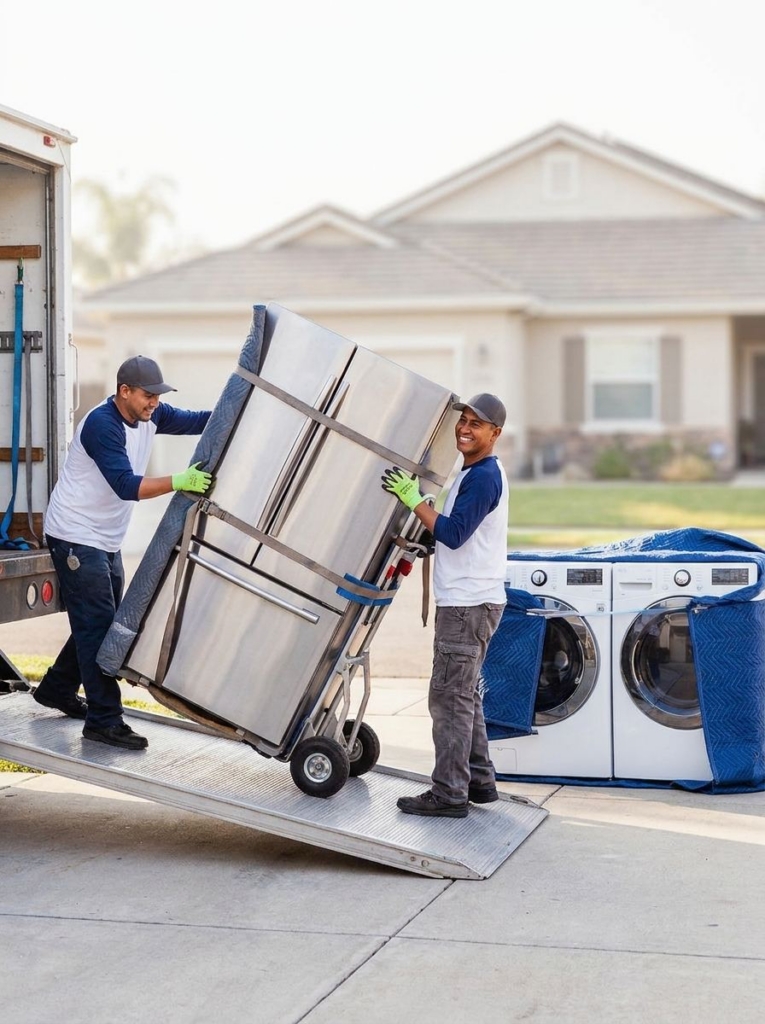
Yes, you can ship appliances. Washers, dryers, refrigerators, and matched appliance sets are moved every day, but the cost depends on size, weight, distance, home access, and service level. If you are researching how to ship appliances, the first question is not just “Can it be done?” It is “Is the appliance worth shipping?”
Shipping usually makes sense for newer, premium, matched, specialty, discontinued, or sentimental appliances. It may not make sense for an older budget washer or refrigerator that is close to replacement age.
Most appliance shipments fall between parcel carriers and a full moving truck. That is where a small-load moving service can fit: one appliance, a washer/dryer pair, or appliances plus a few boxes or furniture pieces.
Can You Ship Appliances—and Is It Worth It?
You have several ways to ship a washer, dryer, refrigerator, or appliance set:
- Small-load or white-glove appliance shipping: Best for residential pickup, inside handling, stairs, protection, and delivery into the home.
- LTL freight: Often cheaper for dock-to-dock or curbside freight, but usually requires palletizing and more work from you.
- Freight marketplaces: Useful for comparing bids, though service levels and handling quality vary.
- Full-service movers: Good when appliances are part of a larger household move, but often inefficient for one or two items.
- Retailer delivery: Best for new purchases, especially when delivery, installation, and haul-away are bundled.
The right choice depends on the appliance’s value and the work you need done. A stainless French-door refrigerator going to a second home is a different shipment than a 12-year-old top-load washer going 80 miles.
2026 Appliance Shipping Cost Estimates
The cost to ship appliances varies widely, but most quotes are driven by distance, dimensions, access, packing, and whether you want curbside freight or inside white-glove service. The 2026 ranges below are planning estimates, not guaranteed prices.
- Dryer — Typical weight/size factors: 100–170 lbs; lighter than washers. Local/regional estimate: $300–$650. Cross-country estimate: $600–$1,100. Notes: Electric dryers are simpler than gas dryers because there is no gas line prep.
- Washing machine — Typical weight/size factors: 150–250+ lbs; drum must be secured. Local/regional estimate: $350–$750. Cross-country estimate: $700–$1,300. Notes: Front-load washers may need shipping bolts or approved drum stabilization.
- Washer and dryer set — Typical weight/size factors: 250–450+ lbs combined. Local/regional estimate: $500–$1,100. Cross-country estimate: $900–$1,800. Notes: The cost to ship washer and dryer sets is often lower per item than shipping each piece separately.
- Standard refrigerator — Typical weight/size factors: 200–300 lbs; must stay upright when possible. Local/regional estimate: $400–$900. Cross-country estimate: $900–$1,700. Notes: The cost to ship a refrigerator rises with height, weight, and door handling.
- Large/French-door refrigerator — Typical weight/size factors: 300–450+ lbs; bulky and damage-prone. Local/regional estimate: $650–$1,400. Cross-country estimate: $1,200–$2,500+. Notes: Premium finishes, doors, stairs, and tight kitchens can add cost.
- Compact appliances — Typical weight/size factors: 50–150 lbs; smaller footprint. Local/regional estimate: $200–$500. Cross-country estimate: $450–$900. Notes: Mini fridges and compact laundry units may be easier to combine with boxes.
- Appliance plus small household load — Typical weight/size factors: Appliance plus boxes, chairs, small furniture, or estate items. Local/regional estimate: $700–$1,800. Cross-country estimate: $1,500–$4,000+. Notes: Often priced as a partial shipment rather than appliance-only freight.
If you are asking, “How much does it cost to ship appliances?” use these numbers as a starting point. A final quote can change based on exact ZIP codes, building access, service speed, declared value, and whether the carrier must pack, load, place, or unpack the appliance.
Appliances are also commonly shipped with a few boxes, chairs, lamps, or other household items. If that sounds like your move, compare appliance-only pricing with broader partial move costs and options.
Distance is the second big driver:
- Same-city/local — Typical estimate: $250–$900. Best-fit service notes: Can be efficient if access is simple and no long-distance linehaul is needed.
- 250–500 miles — Typical estimate: $500–$1,400. Best-fit service notes: Regional small-load shipping or LTL freight may work well.
- 500–1,500 miles — Typical estimate: $700–$2,000. Best-fit service notes: Costs depend heavily on route density and pickup/delivery flexibility.
- Cross-country — Typical estimate: $900–$2,500+ for one major appliance; $1,500–$4,000+ for appliances with household items. Best-fit service notes: Best for valuable appliances, matched sets, or partial household moves.
Matched sets deserve special mention. If you ship a washer and dryer across the country together, the pickup, scheduling, loading, and delivery costs are spread across two pieces. That can lower the per-item cost. The same is true if you ship a refrigerator across the country as part of a small household load instead of as a single standalone item.
What Changes the Cost to Ship Appliances?
A good appliance shipping quote should show what you are paying for. The main cost variables are:
- Distance and route: Popular routes are often more efficient than remote pickups or deliveries.
- Appliance size and weight: A compact dryer is easier than a large French-door refrigerator.
- Number of pieces: Two or three appliances may cost less per item than one.
- Pickup and delivery ZIP codes: Rural areas, islands, and hard-to-access locations may cost more.
- Schedule flexibility: Wider pickup and delivery windows can reduce cost.
- Declared value or coverage: Higher-value appliances may need more coverage and care.
Access matters just as much as mileage. Stairs, tight hallways, elevators, long carries, steep driveways, apartment buildings, inside pickup, room-of-choice delivery, appointment windows, and liftgate needs can all affect the final price.
Packing and protection can also change the quote. Appliances may need moving blankets, stretch wrap, cardboard corner guards, floor protection, palletizing, custom crating, or extra protection for stainless steel panels and digital controls. High-end appliances are expensive to repair, so cheap handling can become costly fast.
Prep work is another factor. Someone may need to disconnect water lines, drain hoses, cap a gas line, unplug dedicated electrical connections, defrost a freezer, remove shelves, secure doors, or stabilize moving parts. Some of that is simple homeowner prep. Some should be handled by a plumber, electrician, gas technician, or trained shipping team.
Before booking, confirm whether the price includes pickup, packing, loading, transportation, delivery, inside placement, unpacking, and debris removal. “Freight” and “white glove” can mean very different things.
Cheapest Way to Ship Appliances Without Risking Damage
The cheapest way to ship appliances is the cheapest safe option, not simply the lowest quote. A low price is not useful if the washer arrives with a damaged drum or the refrigerator doors are dented.
- Parcel carriers — When it can work: Rarely suitable for compact parts or very small appliances. Watch out for: Full-size washers, dryers, and refrigerators usually exceed size, weight, and handling limits.
- DIY truck or trailer — When it can work: Local moves when you have equipment and help. Watch out for: Injury risk, appliance damage, poor tie-downs, and no professional claims process.
- Palletized LTL freight — When it can work: Dock-to-dock or curbside shipments with flexible timing. Watch out for: You may need to drain, wrap, palletize, load, and receive the appliance yourself.
- Freight marketplaces — When it can work: Comparing multiple carrier bids. Watch out for: Service levels vary, and the lowest bidder may not include inside handling.
- Full moving company — When it can work: Appliance is part of a full household move. Watch out for: Can be expensive for one or two appliances.
- Retailer delivery — When it can work: New appliance purchase. Watch out for: Usually does not help with moving an existing appliance to another state.
- Small-load/white-glove appliance shipping — When it can work: Residential pickup, inside service, stairs, multiple items, valuable appliances. Watch out for: Costs more than bare freight but includes more handling and protection.
Palletized LTL freight can be economical if you can prepare the appliance, secure it to a pallet, accept curbside or dock service, and live with a less flexible delivery experience. It is less ideal if you need crews inside the home, stairs handled, or special care for a premium finish.
When comparing LTL, marketplaces, and small-load movers, it helps to look at other cheap ways to ship items out of state. The same rule applies to appliances: remove services you do not need, but do not remove the services that prevent damage.
Small-load or white-glove shipping is usually the better fit when you need residential pickup and delivery, inside handling, multiple appliances, appliances plus furniture or boxes, or professional protection for a valuable item. Full moving companies can do the job, but their pricing often assumes a larger move.
How to Prepare a Washer, Dryer, or Refrigerator for Shipping
Start with a universal appliance prep checklist:
- Measure height, width, depth, and doorway clearance.
- Take photos before pickup, including controls, corners, doors, and existing scratches.
- Remove loose parts, shelves, trays, racks, and accessories when practical.
- Clean and dry the appliance fully.
- Secure cords, hoses, and small hardware in labeled bags.
- Protect corners, doors, handles, and control panels.
- Keep manuals and installation hardware together.
For wrapping, padding, and protecting heavy household goods, it is useful to understand how professionals pack and ship large household items. Appliances need the same basic protection principles, plus appliance-specific steps for water, gas, drums, shelves, and compressors.
How to ship a washing machine
To ship a washing machine safely, disconnect the water supply, remove the hoses, and drain all remaining water. Leave the door open long enough for the interior to dry. Moisture trapped inside can cause odor, mildew, or leakage during transit.
The drum is the key risk. Many front-load washers require shipping bolts or manufacturer-approved stabilization to keep the drum from moving. If you no longer have the original bolts, check the manual or order the correct kit. Do not assume tape or padding is enough.
Secure cords and hoses, protect the control panel, and avoid loading anything heavy on top of the washer. If you are not comfortable disconnecting water lines, hire a plumber or appliance technician.
How to ship a dryer
To ship a dryer, first disconnect the power. For a gas dryer, have the gas line disconnected and capped by a qualified professional. Do not guess with gas connections.
Clean the lint trap and vent areas before shipping. Built-up lint can spill during handling and may create a fire risk when the dryer is reinstalled. Secure the door, power cord, and any loose vent parts. Protect the knobs, digital controls, corners, and painted or stainless panels.
Electric dryers are generally simpler to prepare than gas dryers, but both should be dry, clean, and stable before pickup.
How to ship a refrigerator
To ship a refrigerator, remove all food, unplug it at least 24 hours ahead when possible, and defrost the freezer completely. Clean and dry the interior thoroughly. Remove or secure shelves, drawers, bins, and ice trays. Tape should not touch delicate seals or finished surfaces unless it is safe for that material.
Keep the refrigerator upright whenever possible. Refrigerators contain compressor oil that can move into places it should not be if the unit is tilted or laid down. If the refrigerator was transported upright, wait before plugging it in according to the manufacturer’s guidance. If it was tilted or laid down, wait longer so the compressor oil can settle back.
Large refrigerators may require door removal to fit through tight spaces. That should be planned before pickup, especially with French-door, built-in, or panel-ready units.
Freight vs. White-Glove Appliance Shipping: What’s Included?
Standard freight or LTL shipping is usually built around commercial freight networks. It may be curbside or dock-based. The appliance may need to be palletized. Residential pickup, residential delivery, liftgate service, appointment delivery, and limited-access locations can add fees.
White-glove appliance shipping is more service-heavy. Depending on the provider, it may include inside pickup, professional protection, careful loading, residential delivery, room-of-choice placement, unpacking, and debris removal. Always confirm the exact scope before you book.
The tradeoff is simple. A lower freight quote can become more expensive if you need help with packing, lifting, stairs, appointments, or claims-sensitive handling. A white-glove quote may cost more upfront, but it can include the work that freight leaves to you.
Ship Smart’s model fits small-load appliance shipping: a washer/dryer pair, a refrigerator, or appliances moving with a partial household shipment. It is designed for loads too large for parcel carriers but too small for a traditional full moving company.
Before choosing an appliance shipping service, ask whether the estimate includes:
- Packing materials and protection
- Palletizing or crating, if needed
- Liftgate service
- Residential pickup and delivery
- Stairs, elevators, or long carries
- Inside placement or room-of-choice delivery
- Insurance, valuation, or declared-value coverage
- Delivery appointment windows
- Unpacking and debris removal
Should You Ship or Replace Your Appliance?
Use a simple formula: compare the total shipping cost plus disconnect, prep, reconnect, installation, and possible storage costs against the replacement cost, age, warranty status, energy efficiency, and condition of the appliance.
Shipping often makes sense when the appliance is newer, premium, part of a matched set, hard to replace, discontinued, or already included in a downsizing, estate, second-home, or partial household move. A two-year-old washer/dryer pair may be worth moving cross-country. A high-end refrigerator that matches a kitchen package may also justify professional shipping.
Replacing often makes more sense when the appliance is older, low-cost, inefficient, damaged, or near the end of its expected life. If a retailer will deliver a new appliance, install it, and haul away the old one for less than standalone transport, replacement may be the practical choice.
A few examples:
- Cross-country refrigerator: Ship it if it is premium, newer, or hard to match. Replace it if it is an older standard model and a new one includes delivery.
- Washer/dryer pair across country: Shipping can make sense for a newer matched set, especially if both pieces move together.
- Local appliance move: Professional local moving may be worth it if stairs, tight turns, or gas/water connections are involved.
- Appliance with a small household shipment: Often the strongest case. Adding an appliance to boxes or furniture can be more efficient than shipping it alone.
If the appliance’s value and service needs justify professional handling, get an appliance shipping quote before deciding. The right quote will show whether shipping, freight, moving, or replacing is the smarter move.