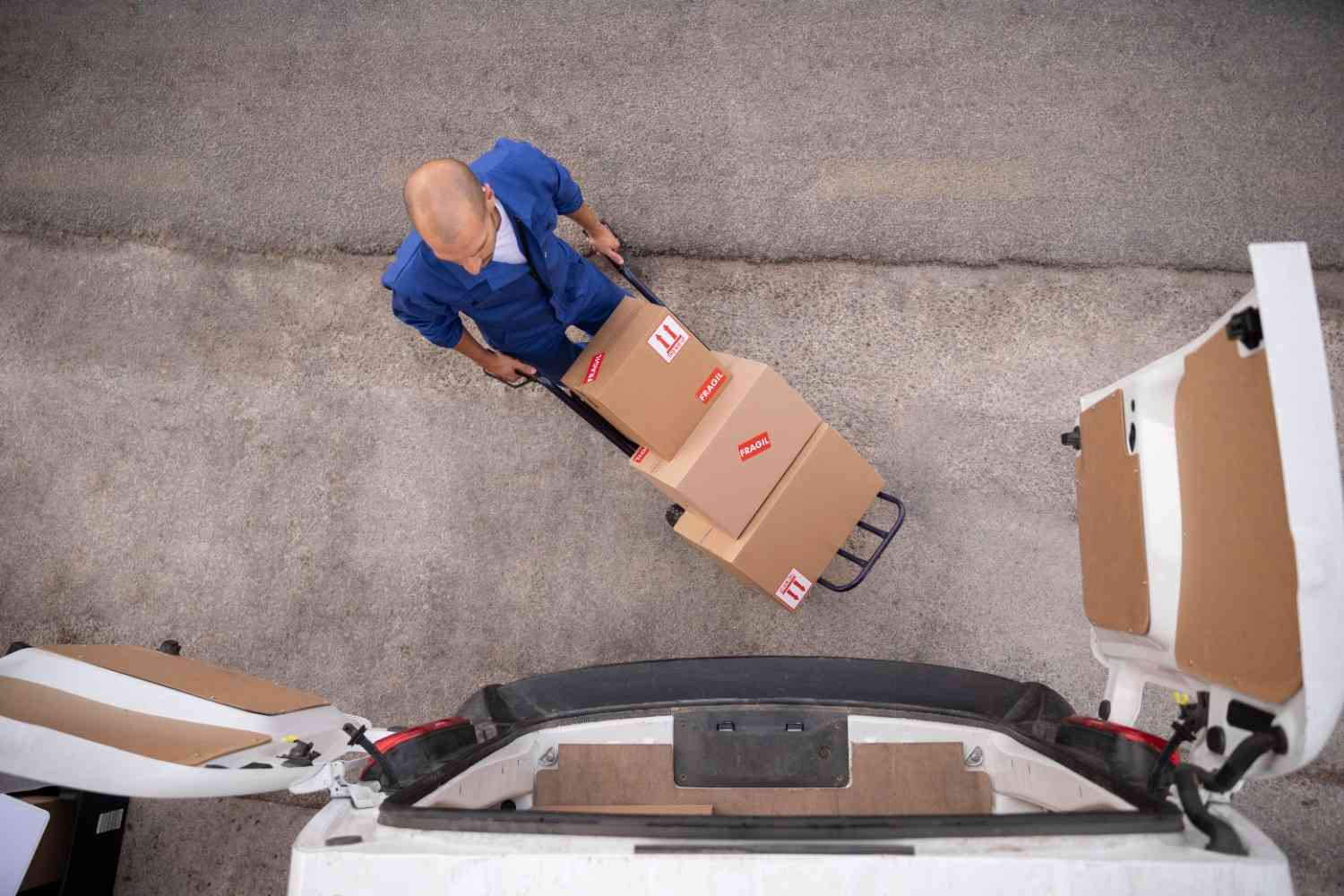
Moving doesn’t always mean filling an entire 26-foot truck. Whether you’re a college student heading home with just a bedroom’s worth of belongings, downsizing from a large home to a cozy apartment, or relocating with only your essentials, small load moving offers a practical and cost-effective solution that traditional Los Angeles movers often overlook.
In a city where the average full-service move costs between $2,500 and $5,000, understanding your options for partial moves can save you thousands while still ensuring your belongings arrive safely at their destination.
What Qualifies as a Small Load Move?
A small load move typically involves transporting belongings that take up less than half of a standard moving truck—roughly 400 to 800 cubic feet of space. This is significantly different from what traditional moving companies in Los Angeles usually handle.
Common small load scenarios include:
A studio or one-bedroom apartment with minimal furniture. Most studio apartments in areas like Koreatown or Downtown LA contain a bed, small couch, dresser, and boxes of personal items—perfect candidates for small load services.
Partial household moves where you’re only taking select items. Many people relocating from Los Angeles to other states choose to sell or donate bulky furniture and only ship items with sentimental or high value.
Student moves between dorm rooms or apartments. USC and UCLA students moving between academic years rarely need full moving trucks, especially when heading home for summer or transferring to different campuses.
Senior downsizing from family homes to assisted living or smaller residences. When transitioning from a house in Pasadena or Glendale to a smaller space, seniors often need to transport only treasured possessions and essential furniture.
Estate or inheritance items that need cross-country shipping. Inheriting a few pieces of furniture or family heirlooms doesn’t warrant hiring a full moving service.
The key distinction is volume. If you can walk through your space and mentally fit everything into a large cargo van or small box truck, you’re looking at a small load situation.
Why Traditional Los Angeles Movers Overcharge for Small Jobs
The moving industry in Los Angeles has a structural problem when it comes to small loads. Traditional moving companies build their business models around full truckload jobs—they make more money when they fill entire 26-foot trucks for local moves or secure exclusive truck space for long-distance relocations.
Here’s what happens when you call a traditional LA mover for a small job:
They charge minimum rates regardless of actual volume. Even if you only have 300 cubic feet of belongings, many companies will bill you for at least 1,200 cubic feet or a minimum number of hours. In LA, local movers often require 4-hour minimums at $150-200 per hour, meaning you’re paying $600-800 even for a two-hour job.
You’re paying for empty truck space. When a moving company dedicates an entire truck to your small load, you’re essentially subsidizing the 60-70% of the truck that remains empty. This makes no economic sense for consumers but protects the mover’s profit margins.
Small jobs get deprioritized. Because traditional movers make less on partial loads, your move often gets scheduled around more profitable full-service jobs. This can mean longer wait times, less experienced crews, or getting bumped if a higher-value customer appears.
Hidden fees add up quickly. LA movers frequently charge extra for stairs (common in apartment buildings throughout Santa Monica, West Hollywood, and Silver Lake), long carries from parking spots (almost guaranteed in dense neighborhoods), and travel time—fees that hit especially hard on already expensive small moves.
The inefficiency creates a market gap that Small Movers Los Angeles services fill by consolidating multiple small loads into single shipments, dramatically reducing costs for everyone involved.
How Small Load Moving Actually Works
Small load moving operates on a fundamentally different model than traditional moving services. Instead of dedicating an entire truck to your belongings, specialized small load movers consolidate shipments from multiple customers traveling in similar directions.
The typical process looks like this:
Step 1: Assessment and Quote You provide details about your inventory—either through a virtual walkthrough, detailed list, or photo documentation. Reputable companies offering Simple & Safe Shipping Solutions will ask specific questions about furniture dimensions, box quantities, and any special handling items. The quote you receive should be based on actual cubic footage, not arbitrary minimums.
Step 2: Pickup Scheduling Unlike traditional movers who might demand specific time windows, small load services typically offer more flexible pickup dates within a range of several days. This flexibility allows them to optimize routes and consolidate efficiently. In Los Angeles, pickups happen throughout diverse neighborhoods from Downtown to the Valley, from the Westside to East LA.
Step 3: Professional Packing and Loading Your items are carefully inventoried, wrapped, and loaded. Professional small load movers use the same packing standards as full-service companies—furniture pads, shrink wrap, proper box stacking—but with greater attention to space efficiency. Everything gets photographed and documented for your records.
Step 4: Consolidated Transportation Your belongings travel alongside other customers’ shipments heading in the same direction. If you’re moving from Los Angeles to Austin, your furniture might share truck space with someone else relocating to Dallas or Houston. The driver makes multiple deliveries along the route, which is why transit times are typically longer than dedicated service.
Step 5: Delivery You receive advance notice of your delivery window, usually a 24-48 hour range. Upon arrival, your items are offloaded, unwrapped, and placed in your new home according to your instructions. Any damage or missing items should be reported immediately for insurance claims.
The consolidation model is what makes small load moving affordable. You’re only paying for the space you actually use, and the cost gets further reduced by sharing transportation expenses with others.
Real Cost Breakdown: What You’ll Actually Pay
Understanding the true cost of small load moving in Los Angeles requires looking beyond advertised hourly rates to the total delivered price.
For local moves within Los Angeles County:
Traditional movers charge $150-250 per hour with 4-hour minimums, meaning a small studio move costs $600-1,000 even if it only takes two hours. Add $75-150 for stairs, $50-100 for parking difficulties, and potential fuel surcharges, and you’re easily hitting $900-1,300 for a move that involves minimal belongings.
Small load services typically charge $300-600 for the same move, based on cubic footage rather than time. A studio apartment averaging 350-400 cubic feet might run $350-450, while a one-bedroom with 500-600 cubic feet could cost $500-600. These prices usually include basic loading, transport, and unloading without surprise fees.
For cross-country moves from Los Angeles:
Traditional long-distance movers quote $2,500-5,000 minimum for any shipment, regardless of size. The cost is calculated per pound (typically $0.50-0.75 per pound with a 3,000-pound minimum) or per cubic foot ($6-12 per cubic foot with minimum charges). A small load of 600 cubic feet at $8 per cubic foot reaches $4,800—far more than necessary.
Small load movers charge $1,200-2,500 for partial moves from LA to popular destinations like Austin, Denver, Portland, or Phoenix. The price varies based on exact mileage, delivery timeline flexibility, and current demand for that route. A 500 cubic foot shipment from Los Angeles to Austin might cost $1,400-1,800, while the same size shipment to New York could run $2,000-2,400.
Example cost comparison for a one-bedroom apartment move from LA to Denver:
- Traditional mover: $4,200 (800 cubic feet at $5.25 per cubic foot)
- Small load service: $1,650 (800 cubic feet consolidated)
- Savings: $2,550 (60% reduction)
These numbers represent real market rates as of 2026. The savings become even more dramatic for smaller loads under 500 cubic feet, where traditional movers’ minimum charges create the largest price disparities.
What to Expect During the Process
Managing expectations is crucial for small load moves because the service model differs significantly from traditional moving.
Timeline expectations: Local LA moves typically complete within 1-3 days from pickup to delivery. Cross-country moves take 7-14 days on average, sometimes extending to 21 days during peak summer season when demand is highest. This is longer than dedicated truck service (3-7 days for cross-country) but the tradeoff is substantial cost savings.
Communication: You should receive regular updates at each phase—pickup confirmation, departure from origin, estimated arrival window, and final delivery notice. Companies offering quality Small Movers Los Angeles services provide tracking capabilities and dedicated coordinators to answer questions throughout the process.
Flexibility requirements: Small load moving requires more flexibility than traditional service. Pickup windows might span 2-3 days, and delivery windows are typically 24-48 hours rather than specific appointment times. This flexibility is what enables the cost savings—the company can optimize routes and consolidation.
Packing standards: Professional small load movers use identical protection methods as full-service companies. Furniture gets padded and wrapped, fragile items receive special attention, and boxes are strategically positioned to prevent shifting. The difference isn’t in quality but in how efficiently space is utilized.
Insurance coverage: Verify what protection is included. Basic liability coverage (typically $0.60 per pound per item) comes standard but provides minimal protection for high-value items. Full replacement value insurance costs extra but is worth considering for valuable furniture or electronics. Read the fine print about what’s excluded—most policies don’t cover items you packed yourself unless you purchased additional coverage.
Preparing for Your Small Load Move
Proper preparation ensures your move goes smoothly and helps you get the most accurate quote.
Create a detailed inventory: List everything you’re moving with approximate dimensions. For furniture, measure length, width, and height. Count boxes by size (small, medium, large). Include any items requiring special handling like artwork, musical instruments, or electronics. The more accurate your inventory, the more precise your quote.
Declutter aggressively: Small load moving becomes more cost-effective the less you ship. In LA’s expensive real estate market, many people accumulate furniture and belongings that aren’t worth the cost of moving. Consider selling or donating items on Craigslist, Facebook Marketplace, or through local LA charities. That $150 IKEA bookshelf might cost $200 to move cross-country—better to sell it and buy new at your destination.
Understand LA-specific logistics: If you’re in a building without elevator access in neighborhoods like Echo Park, Silver Lake, or parts of West Hollywood, mention this upfront. Narrow streets in areas like Venice or the Hollywood Hills can complicate truck access. Gated communities, building COIs (Certificate of Insurance requirements), and reservation systems all affect pickup logistics.
Time your move strategically: Moving costs in Los Angeles spike during summer months (June-August) when rental leases turn over and families relocate before school starts. If possible, schedule your small load move during fall or winter for better rates and shorter wait times. Mid-month dates also tend to be cheaper than month-end when most leases expire.
Get multiple quotes: Don’t accept the first price you receive. Get quotes from at least three small load movers, comparing not just price but services included, insurance options, and estimated timelines. Be wary of quotes that seem too good to be true—lowball estimates often lead to surprise charges later.
Finding Reliable Small Load Movers in Los Angeles
The LA moving market includes everyone from legitimate professionals to unlicensed operators running scams. Protecting yourself requires due diligence.
Verify licensing and insurance: All movers operating in California must have a Cal-T number issued by the California Public Utilities Commission. Check the CPUC website to verify the company is licensed and review any complaints filed against them. For interstate moves, confirm the mover has a US DOT number registered with the Federal Motor Carrier Safety Administration.
Read reviews carefully: Don’t just look at star ratings on Google or Yelp. Read actual review content, paying attention to how companies handle problems. Every moving company occasionally faces challenges—what matters is how they resolve issues. Look for patterns in complaints: if multiple reviews mention damaged items, hidden fees, or delivery delays, take those warnings seriously.
Understand the estimate type: “Binding estimates” guarantee the price won’t increase unless you add items or services. “Non-binding estimates” can change based on actual weight or volume at pickup. “Binding not-to-exceed estimates” are the best consumer protection—the final cost cannot exceed the estimate even if the shipment weighs more than expected, but it can decrease if it weighs less.
Ask specific questions: What’s included in the base price? Are there charges for stairs, long carries, or bulky items? What’s the claims process if items are damaged? How do they handle delivery window changes? What payment methods do they accept, and when is payment due? Reputable companies will answer these questions transparently.
Red flags to avoid: Companies demanding large deposits (more than 20-25%) before pickup. Movers without physical business addresses in LA. Quotes dramatically lower than competitors—legitimate moving costs fall within a predictable range. Companies that can’t provide insurance certificates or licensing numbers upon request. Pressure to sign contracts immediately without time to review terms.
Special Considerations for Los Angeles Moves
Los Angeles presents unique challenges that affect small load moving logistics.
Parking and access: Many LA neighborhoods have restricted parking, requiring permits for moving trucks. Buildings in West Hollywood, Beverly Hills, and Downtown often mandate service elevator reservations days in advance. Beach communities like Santa Monica or Manhattan Beach have narrow streets that large trucks can’t navigate, requiring shuttle services that add time and cost.
Building requirements: High-rise buildings throughout LA require COI (Certificate of Insurance) documentation, sometimes with specific coverage minimums. Some luxury buildings in Century City or Beverly Hills require background checks for moving crews. HOAs in planned communities may restrict moving to certain days or hours. Verify these requirements early to avoid delays.
Traffic considerations: LA traffic significantly impacts moving timelines. A pickup in the San Fernando Valley during rush hour could take twice as long as the same move mid-day. Movers familiar with LA plan routes around traffic patterns, avoiding peak congestion on the 405, 101, and 10 freeways.
Climate factors: Unlike many cities, LA weather rarely disrupts moving. However, summer heat can affect certain items—consider how electronics, artwork, or heat-sensitive belongings will handle temperatures potentially reaching 90-100°F during transport. Professional movers account for this with climate-controlled storage if needed.
Frequently Asked Questions
How much can I fit in a small load? Approximately 400-800 cubic feet, equivalent to a studio apartment or one-bedroom with minimal furniture. Think a bed, couch, dresser, TV, and 20-30 boxes. If you need exact calculations, multiply length × width × height in feet for each item and add up the totals.
Can I ship a small load cross-country? Absolutely. Small load services excel at long-distance moves because they consolidate multiple shipments heading the same direction. This is often the most cost-effective way to move partial household goods from Los Angeles to other states.
What items can’t be shipped in small loads? Hazardous materials (paint, propane, cleaning chemicals), perishable foods, plants, pets, and items of extraordinary value (jewelry, cash, important documents). These restrictions apply to all moving services, not just small loads.
How long does delivery take? Local LA moves: 1-3 days. Cross-country moves: 7-21 days depending on distance and route optimization. Longer timelines reflect the consolidation model—your items travel with others heading similar directions, which takes more time but costs significantly less.
What if my load is larger than estimated? Reputable movers reassess volume at pickup. If your load exceeds the original estimate by more than 10-15%, expect a revised quote before loading continues. This is why accurate inventories matter—significant discrepancies can delay your move or increase costs.
Is my stuff safe sharing a truck with other shipments? Professional small load movers separate each customer’s belongings with padding and strategic loading. Your items are inventoried, photographed, and individually tracked. The risk of mixing shipments is minimal with reputable companies.
Making the Right Choice for Your Move
Small load moving serves a specific market need that traditional Los Angeles movers often ignore or overcharge for. If you’re relocating with less than a full household, paying for an entire truck makes no financial sense.
The key is finding legitimate small load movers who specialize in partial shipments rather than trying to negotiate with traditional companies designed for full-service moves. Companies offering dedicated Simple & Safe Shipping Solutions understand the unique logistics of consolidation and build their operations around efficiency rather than simply downsizing traditional moving services.
Before committing to any mover, verify licensing, read reviews, understand exactly what’s included in your quote, and ensure the company maintains proper insurance. The LA moving market includes excellent professionals alongside questionable operators—your due diligence protects your belongings and your wallet.
For many Los Angeles residents, especially those relocating to other states or downsizing within the city, small load moving offers the perfect balance of affordability, convenience, and professional service. You shouldn’t pay for truck space you don’t need, and with the right moving partner, you won’t have to.
Ready to get an accurate quote for your small load move? Small Movers Los Angeles can provide a detailed estimate based on your specific inventory and destination, with transparent pricing and no hidden fees.




 27 MARCH 2026